
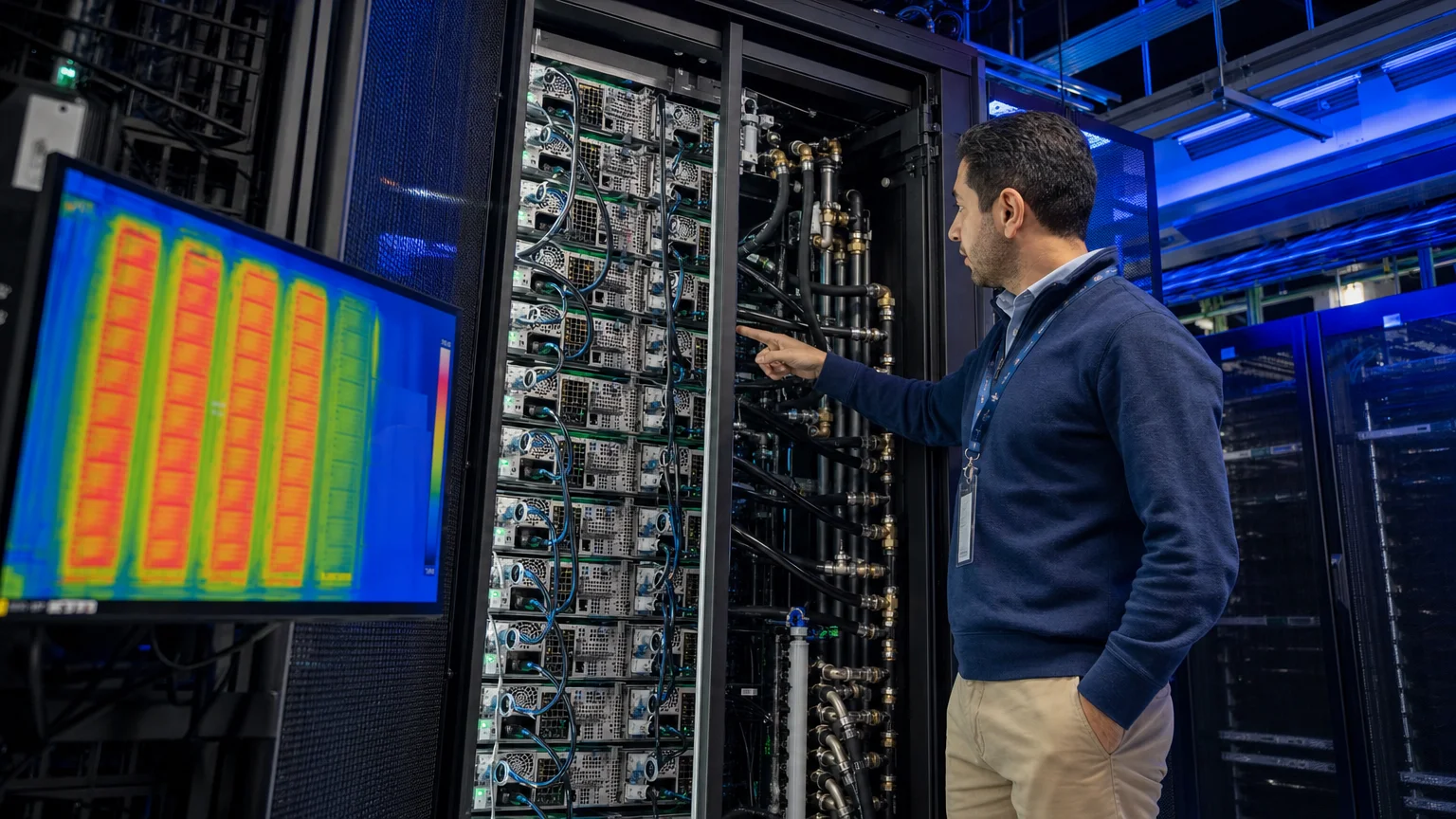
High-Density Rack Planning for AI and GPU Infrastructure
CoreGrid AI Infrastructure helps AI teams, SaaS companies, and enterprise IT departments plan high-density rack deployments before committing to colocation space. This service maps your GPU and AI server hardware to real facility capabilities — covering per-cabinet power draw, cooling compatibility, and physical layout — so your infrastructure decisions are grounded in what colocation facilities can actually deliver. Based in Dallas and active across 18 U.S. data center markets, CoreGrid provides vendor-neutral planning guidance with no colocation provider affiliations.
What Is High-Density Rack Planning?
High-density rack planning is a structured technical planning process that models how AI and GPU server hardware maps to the power, cooling, and physical capacity of colocation data center cabinets. A standard enterprise IT rack draws roughly 5–8 kW. A modern GPU cluster rack — loaded with AI accelerators — can demand 20 kW, 30 kW, or more per cabinet. Most general-purpose colocation facilities are not built to handle that load at scale.
High-density rack planning covers:
- Per-cabinet kW modeling — calculating actual power draw based on server hardware specifications
- Cooling method compatibility — determining whether a facility’s air cooling, rear-door heat exchangers, or liquid cooling infrastructure can support your density tier
- Physical layout planning — mapping rack count, aisle configuration, and power distribution unit (PDU) requirements
- Colocation facility benchmarking — comparing candidate facilities against your density requirements before you engage in contract negotiations
This service does not include electrical engineering, utility interconnection design, construction management, or licensed engineering services. CoreGrid operates as an advisory and planning firm. You can review our full service catalog to understand the complete scope of what CoreGrid offers.
What types of companies need high-density rack planning?
Companies deploying GPU clusters, AI training infrastructure, or high-performance inference workloads are the primary candidates. AI startups scaling from cloud to dedicated hardware, enterprise IT teams building private AI compute, and SaaS companies running inference at scale all face the same challenge: standard colocation assumptions break down when rack density climbs above 10–15 kW per cabinet.
What is the difference between kW per rack and total facility power?
kW per rack refers to the power draw of a single cabinet and its contents — this is the number that determines whether a specific facility can physically support your hardware. Total facility power is the aggregate capacity of the entire data center. Both matter, but high-density planning focuses on per-rack density first, because a facility may have abundant total power while still being unable to deliver 30 kW to a single cabinet in a specific cage or suite.
Does high-density rack planning apply to edge or inference deployments?
Yes. Inference workloads — even at smaller scale — often use GPU-accelerated hardware that exceeds standard rack density assumptions. High-density rack planning is relevant any time your hardware specifications push beyond what a general-purpose colocation cabinet is designed to support. Our blog covers AI inference infrastructure planning in depth if you want to explore that topic further.
Signs You Need High-Density Rack Planning
High-density rack planning is necessary when your hardware requirements outpace what standard colocation assumptions can accommodate. These are observable signals that the planning step should happen before — not after — you sign a colocation agreement.
- Your GPU or AI server specs exceed 10 kW per rack. Most standard colocation cabinets are provisioned for 5–8 kW. Once you cross 10 kW, you need to verify facility-level support before assuming availability.
- A colocation provider has given you a standard quote without asking about your hardware. Providers quoting rack space without reviewing your power draw may not have assessed whether their facility can support your actual density.
- You are migrating AI workloads from cloud to dedicated hardware for the first time. Cloud-to-colo migrations involving GPU hardware almost always surface density mismatches that weren’t visible in the cloud environment.
- Your cooling method is undefined. If your team hasn’t yet determined whether you need air cooling, rear-door heat exchangers, or direct liquid cooling, rack planning needs to happen before facility selection — not after.
- You are evaluating multiple colocation markets simultaneously. Without a consistent density framework, comparing facilities across Dallas, Phoenix, Northern Virginia, and other markets becomes an apples-to-oranges exercise.
- You’ve received conflicting information from colocation providers about what they can support. Vendor claims about “high-density readiness” vary widely; independent planning analysis gives you a consistent benchmark.
- Your rack count or GPU configuration is expected to grow within 12–18 months. Planning for current density without modeling growth often results in a second migration cycle sooner than expected.
How Much Does High-Density Rack Planning Cost in Dallas, TX?
Pricing for high-density rack planning engagements at CoreGrid AI Infrastructure is scoped based on project complexity and is not published as a flat rate. To receive an accurate engagement estimate, contact CoreGrid directly with the details outlined below.
What affects the cost of a high-density rack planning engagement?
| Service Situation | Typical Range | What Affects Price |
|---|---|---|
| Single-market, defined rack count | Contact for quote | Number of racks, hardware complexity, timeline |
| Multi-market comparison (2–4 markets) | Contact for quote | Markets covered, facility count, depth of benchmarking |
| Large GPU cluster or phased deployment | Contact for quote | Rack count, growth modeling, cooling method complexity |
What you’ll need to provide for an accurate quote:
- GPU or AI server hardware specifications (model, count, estimated kW per unit)
- Target rack count (current and projected)
- Preferred geographic markets
- Deployment timeline
- Any existing colocation proposals or facility shortlists
What may not be included in a standard engagement:
- Licensed electrical engineering or utility interconnection analysis
- Construction or buildout management
- Legal review of colocation contracts
- Ongoing facility management after deployment
How long does high-density rack planning take?
Engagement timelines depend on scope. A focused single-market engagement for a defined rack count can move quickly; multi-market planning with complex GPU cluster configurations takes longer. CoreGrid provides a timeline estimate during the initial discovery call so you can plan accordingly.
Is high-density rack planning a one-time engagement or ongoing?
Most clients engage CoreGrid for a defined planning project tied to a specific deployment decision. Some clients return for follow-on engagements as their infrastructure scales or as they evaluate new markets. CoreGrid does not require retainer commitments for planning engagements.
Can I use CoreGrid’s rack planning output in a colocation RFP?
Yes. CoreGrid’s planning deliverables are written documents designed to be shared with internal stakeholders and used in colocation RFP or vendor negotiation processes. The vendor-neutral framing means the output is not tied to any specific provider’s format or interests.
Why Choose CoreGrid AI Infrastructure?
CoreGrid AI Infrastructure is a Dallas-based consulting and planning firm with 6 years of experience supporting AI, GPU, cloud, and high-performance computing infrastructure decisions. The team has reviewed more than 120 data center and colocation projects, analyzed 18 U.S. data center markets, and supported more than $420 million in infrastructure decisions.
Key differentiators for high-density rack planning specifically:
- Vendor-neutral positioning. CoreGrid does not own data centers, does not represent colocation providers, and does not receive referral fees. Planning outputs reflect your requirements, not a provider’s inventory.
- AI and GPU workload focus. High-density planning at CoreGrid is built around the specific power and cooling demands of AI accelerator hardware — not adapted from general IT colocation frameworks.
- Multi-market coverage. With active research across 18 U.S. data center markets, CoreGrid can benchmark facilities in Dallas-Fort Worth, Northern Virginia, Phoenix, Chicago, and other major markets within a single engagement.
- Written deliverables. Clients receive documented planning outputs, not just verbal recommendations, making it easier to align internal teams and move into vendor negotiations with a clear technical baseline.
- Defined scope. CoreGrid is clear about what it does and does not provide. The firm does not offer electrical engineering, construction management, or licensed professional services — which means no scope creep into areas outside its expertise.
Learn more about the team and approach on the CoreGrid AI Infrastructure about page.
Book Your High-Density Rack Planning Engagement in Dallas, TX
CoreGrid AI Infrastructure has reviewed more than 120 data center and colocation projects across 18 U.S. markets and supported more than $420 million in infrastructure decisions — all from a vendor-neutral advisory position. If your team is planning a GPU cluster deployment, migrating AI workloads from cloud to dedicated hardware, or evaluating colocation options across multiple markets, high-density rack planning is the step that prevents costly mismatches between your hardware and the facility you select.
Here’s what happens after you reach out:
- A CoreGrid team member contacts you within one business day to schedule a discovery call.
- On the call, you walk through your hardware specs, target markets, timeline, and power budget.
- CoreGrid scopes the engagement and provides a written project outline before any work begins.
Call us: (214) 555-0196 Contact form: Submit your project details Email: hello@coregridai.com
There is no obligation to proceed after the discovery call. CoreGrid’s goal is to make sure the engagement is the right fit before either party commits.
Last updated: July 2026
Areas We Serve
Frequently Asked Questions
What is high-density rack planning and why does it matter for AI workloads?
High-density rack planning is the process of mapping GPU and AI server hardware to colocation cabinets based on power draw, cooling capacity, and physical layout requirements. AI servers — especially GPU clusters — routinely exceed 20–30 kW per rack, far above the 5–8 kW typical of general IT deployments. Without this planning step, teams risk deploying into facilities that cannot support their actual power or cooling requirements, which can result in performance throttling, forced hardware reconfiguration, or an unplanned migration.
Does CoreGrid own or operate the data centers where my racks will be deployed?
No. CoreGrid AI Infrastructure is a consulting and planning firm, not a data center owner or operator. CoreGrid's role is to analyze your requirements, benchmark colocation facilities, and provide vendor-neutral planning guidance. The colocation agreement is between you and the facility provider you select — CoreGrid does not sit in that relationship.
Which markets does CoreGrid support for high-density rack planning?
CoreGrid supports planning engagements across 18 U.S. data center markets, including Dallas-Fort Worth, Austin, Houston, Phoenix, Atlanta, Northern Virginia, Chicago, Columbus, Las Vegas, Salt Lake City, Denver, New York Metro, Los Angeles, San Jose, Seattle, and Miami. Dallas-based clients can also meet with the CoreGrid team in person.
How is high-density rack planning different from standard colocation consulting?
Standard colocation consulting typically focuses on space allotments, power budgets, and contract terms at a summary level. High-density rack planning goes deeper — it models per-cabinet kW loads, evaluates cooling method compatibility, and stress-tests whether a specific facility's infrastructure can support AI-grade density before you sign a lease. The distinction matters most when your hardware exceeds 15–20 kW per rack.
What information do I need to provide to start a high-density rack planning engagement?
At minimum, CoreGrid needs your target server hardware specifications (including GPU model and count), estimated rack count, target deployment timeline, preferred geographic markets, and power budget. The more detail you provide upfront, the more precise and actionable the planning output will be.
Can CoreGrid guarantee that a colocation facility will accept my high-density deployment?
No. CoreGrid provides planning analysis and vendor-neutral facility comparisons, but cannot guarantee facility acceptance, power availability, or contract outcomes — those are determined by the colocation provider. CoreGrid's value is in helping you identify facilities most likely to support your requirements before you invest time in negotiations, reducing the risk of late-stage surprises.
How does high-density rack planning connect to liquid cooling readiness?
High-density rack planning and [liquid-cooling readiness assessments](/services/liquid-cooling-readiness/) are closely related but distinct. Rack planning establishes your per-cabinet power and density requirements; liquid cooling readiness evaluates whether a target facility's infrastructure can support liquid cooling delivery at that density. For deployments above 30 kW per rack, both planning steps are typically relevant.